Guides · Basics
What should a medical ID say?
Space on a medical ID is small, so every word counts. The aim is that a stranger understands the most important fact about your health in a few seconds.
Start with what changes your care
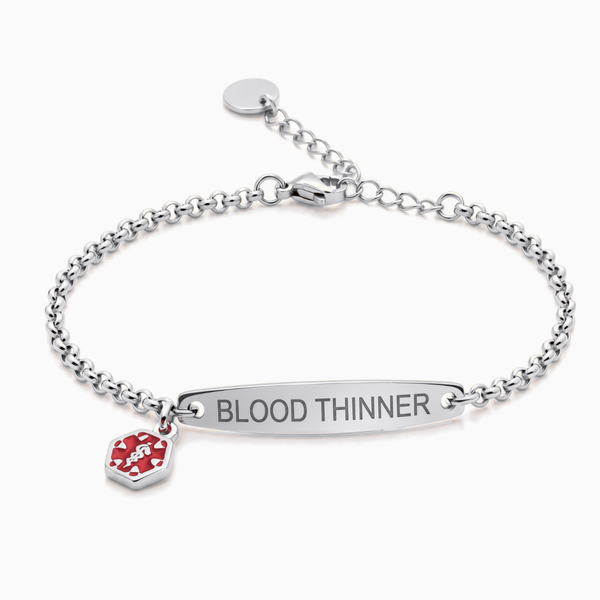
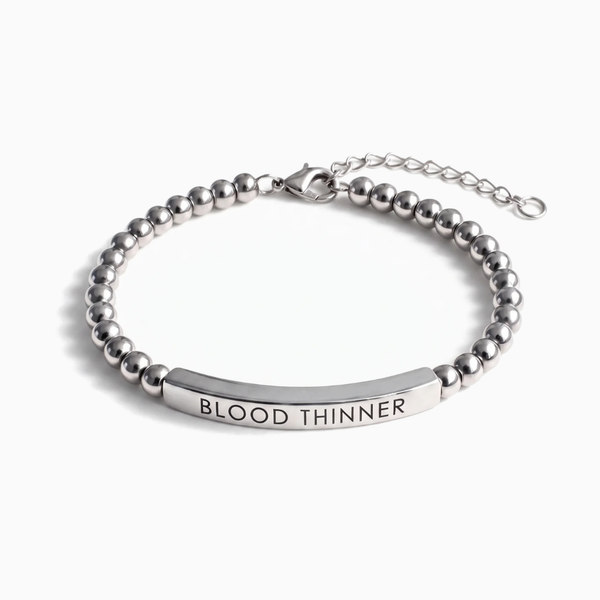
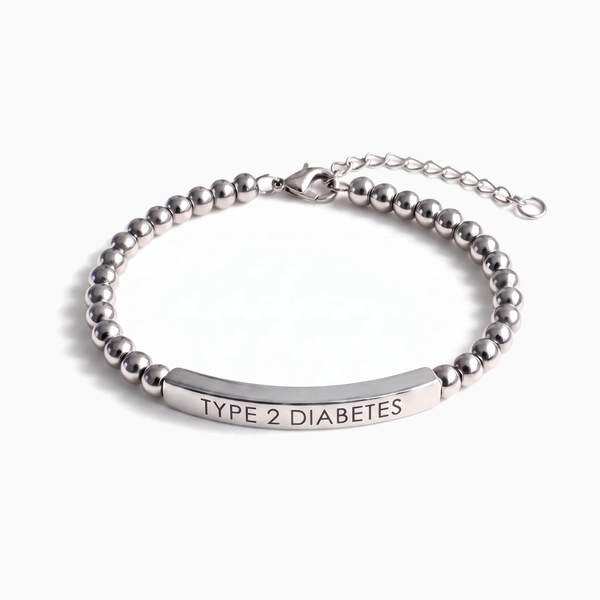
Put the one thing first that would change what someone does for you. For many people that is a condition (for example TYPE 1 DIABETES or EPILEPSY), a medication (for example a blood thinner) or an allergy.
Be specific when it helps
"Blood thinner" is clear to everyone. Naming the medication, such as ELIQUIS, gives more detail. Both are useful; choose what fits you best, and ask your doctor if you are not sure.
Use plain words
Avoid abbreviations that only you or your doctor would recognise. Write it so a bystander can read it too, not only a professional.
Keep the rest elsewhere
Details such as dosages, other conditions and emergency contacts are better kept on a card in your wallet or in your phone's medical info, and kept up to date.
This guide is general information, not medical advice. Talk to your doctor or pharmacist about what is right for your situation.
Clear medical IDs, worldwide tracked shipping and a 30-day money-back guarantee.
Shop medical IDs